
SAR – ស
Museum of Cambodian Modern Art
Art is the highest form of hope.
Gerhard Richter
01
Historical context
Prior to the Khmer Rouge era, a new generation of Cambodian artists initiated a transition from traditional to modern art. Although many of these artists perished during the civil war, some survived by hiding, living in exile, or creating propaganda posters for the regime. In the early 1980s, a fresh wave of modern artists emerged, inspiring the current young generation of contemporary artists.
Cultural and educational context
Modernism typically represents a shift from classical to contemporary art.
The decimation of Cambodian modern artists led to their near erasure from history, despite their talents gaining international recognition. This disruption created difficulties for subsequent generations in understanding Cambodian contemporary art.
The First Museum of Modern Art in Cambodia
Located in Siem Reap, it presents exceptional and rare artworks from the 1950s to the present day, including works by the pioneers of modern art in Cambodia. The museum offers visitors a unique opportunity to explore Cambodia’s modern cultural history beyond the Angkor temples.
From the Angkor Empire to the French Protectorate
Patrimonial art
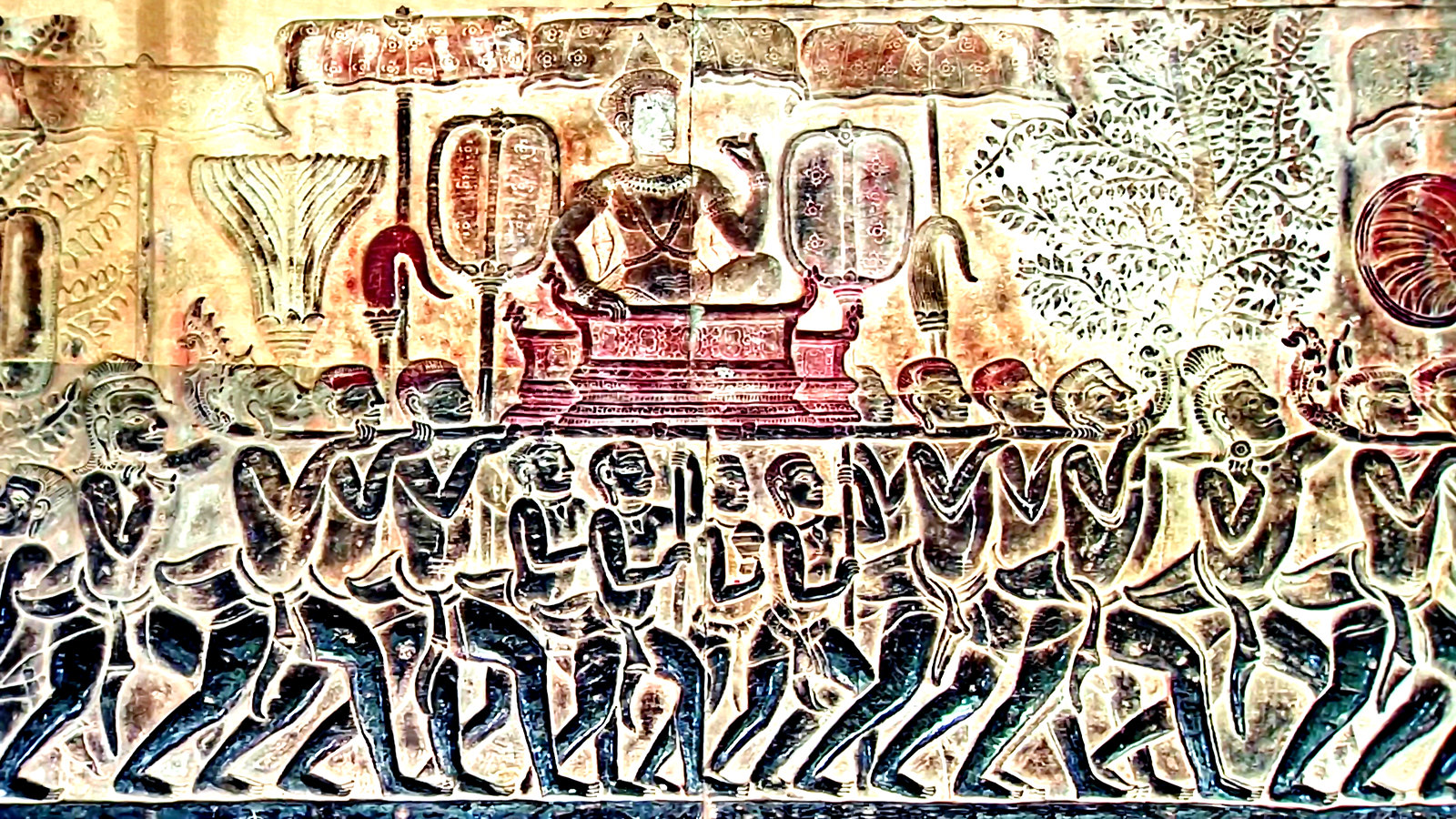
The oldest reference to painting in Khmer history comes indirectly from traces of pigments found on bas-reliefs and descriptions of decorated interiors of temples, Banteay Chhmar and Angkor Wat for example. This suggests that painting was likely a complementary art form to sculpture and architecture, deeply integrated into Khmer religious and cultural expression.
Oldest examples of paintings are mainly religious, murals on the Pagoda walls, Preah bot, glass painting or canvas paintings.
The Sangkum Reastr Niyum Era
Modern art
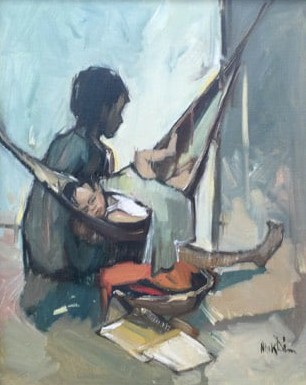
In the late 1940’s, His Royal Highness Norodom Sihanouk appointed the Japanese artist Shigenari Suzuki (1901-?) to teach modern art to Cambodian students, training the first generation of Cambodian modern artists, including notable names like Nhek Dim and Sam Yoeun.
From this period until the tragic Khmer Rouge era, Cambodia was a lively center of the arts, known for its thriving galleries, especially in Phnom Penh and Battambang, and internationally renowned artists.
Post-Khmer Rouge Era
Contemporary art
The Cambodian civil war had a devastating effect on the country’s artistic community. Most artists did not survive the conflict. When art education resumed in 1979, young Cambodians eagerly joined these programs, determined to restore and reinvent their artistic heritage. With the support of a few dedicated collectives and art galleries, these emerging artists began to reconstruct Cambodia’s art scene. Their works, often infused with dramatic memories of the past, showcased both their talent and creativity. Today, a new generation of contemporary artists is energizing Cambodia’s vibrant art scene, ensuring that the legacy of creativity continues.
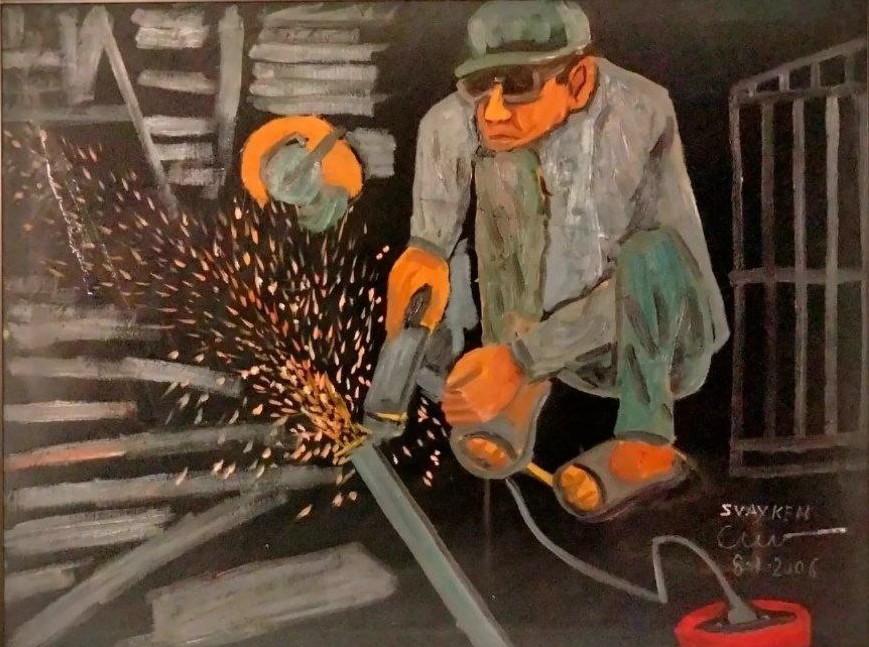
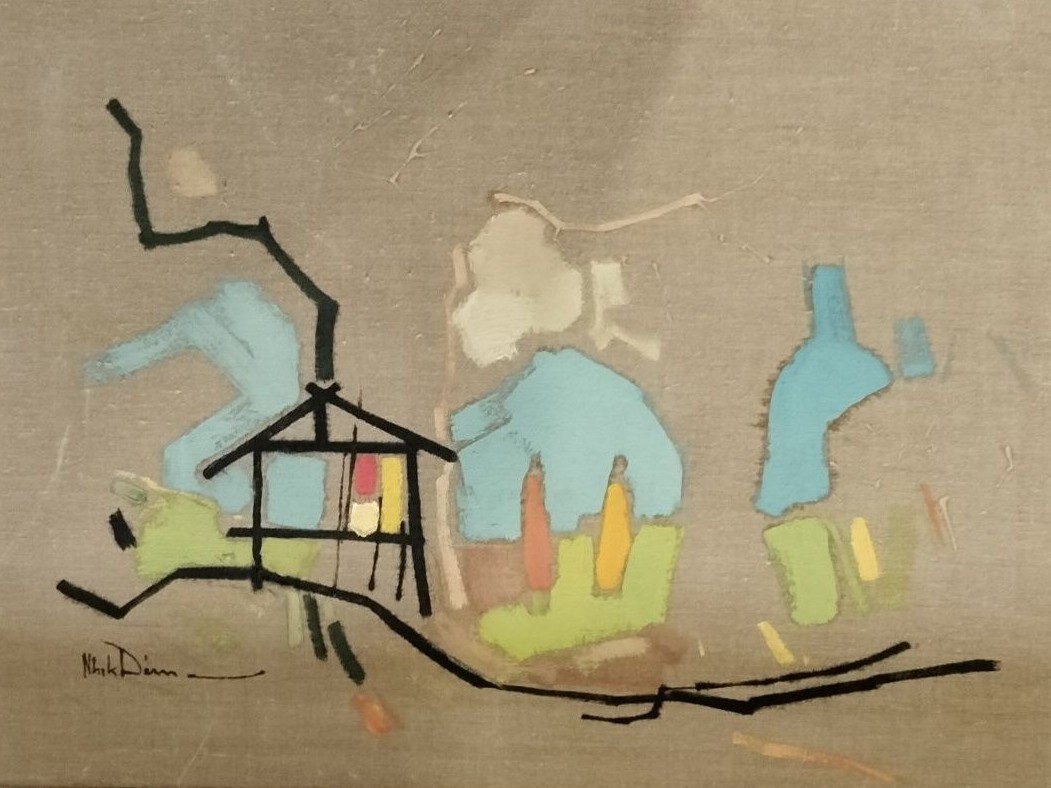

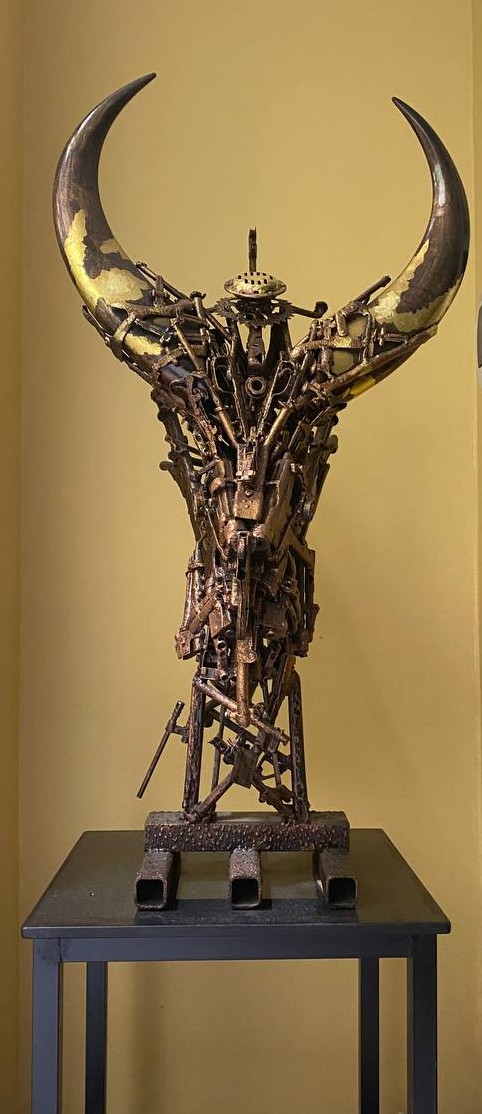
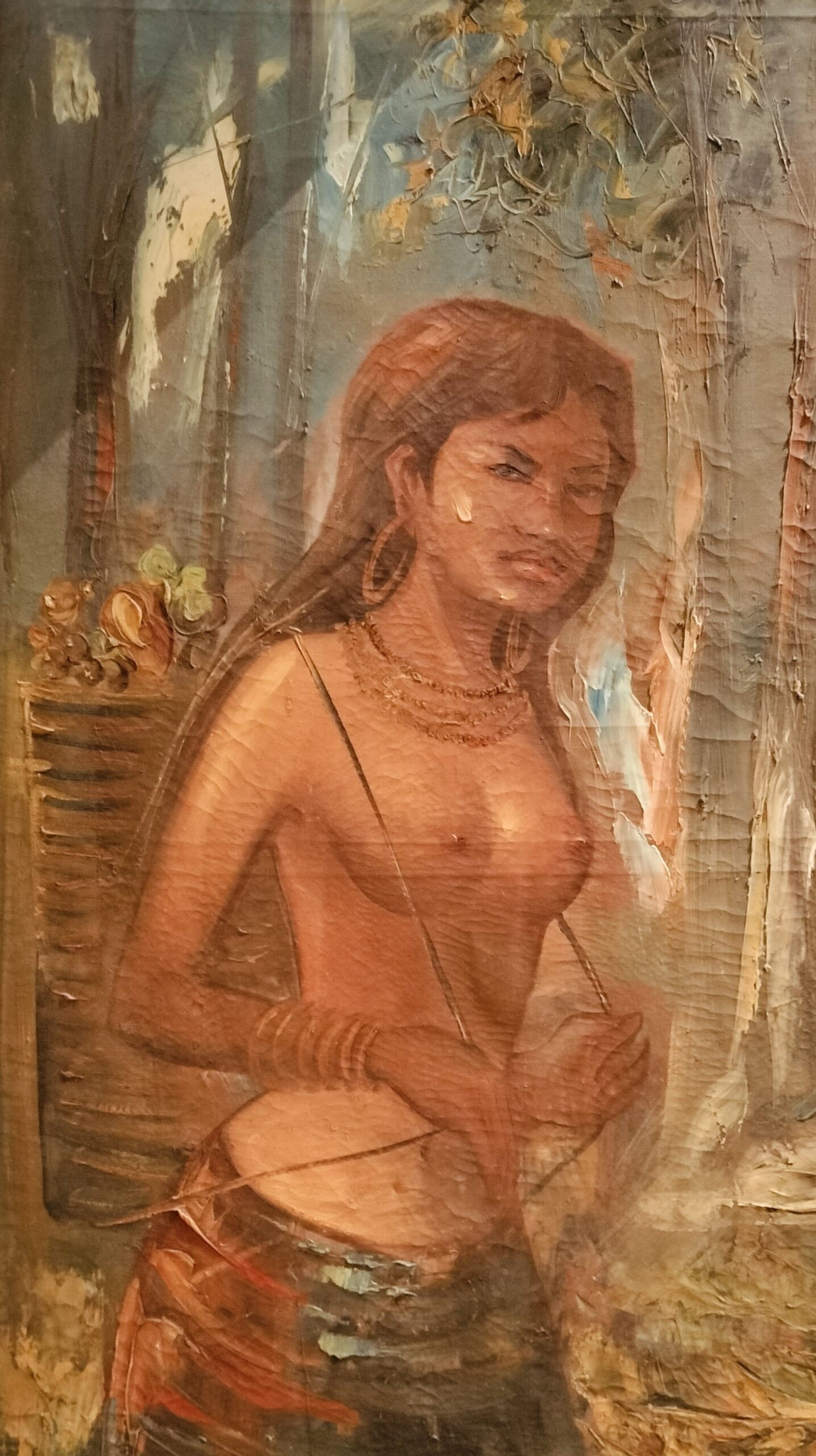
SAR is the first move toward creating a major modern and contemporry art institution in Cambodia.
Behind the scene
Founded and managed by a Cambodian art lover young lady, in collaboration with a French art collector and long-term resident of Cambodia, SAR addresses the limited visibility of Cambodian modern and contemporary art within the country. While Cambodia boasts impressive museums, these predominantly focus on the heritage of the Khmer Empire. Recognising this gap, the founders have dedicated years to researching information and artworks from Cambodia’s modern era, spanning from independence to the Khmer Rouge period, and have actively worked to recover dispersed artworks from around the globe to return them to their homeland. Combining these works with the one from post-civil war first-generation contemporary artists and today’s young creatives, this collection traces the evolution of Cambodian modern and contemporary art from its origins to the present.